a short
project overview
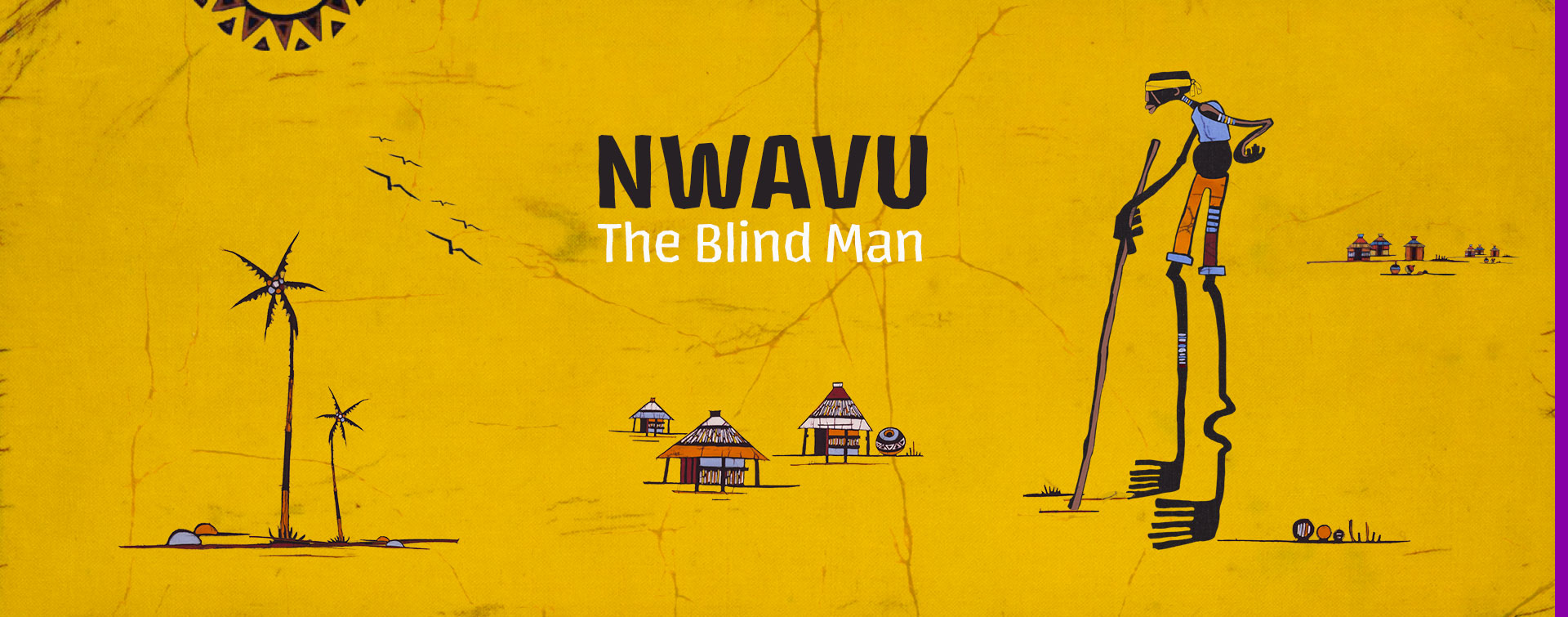
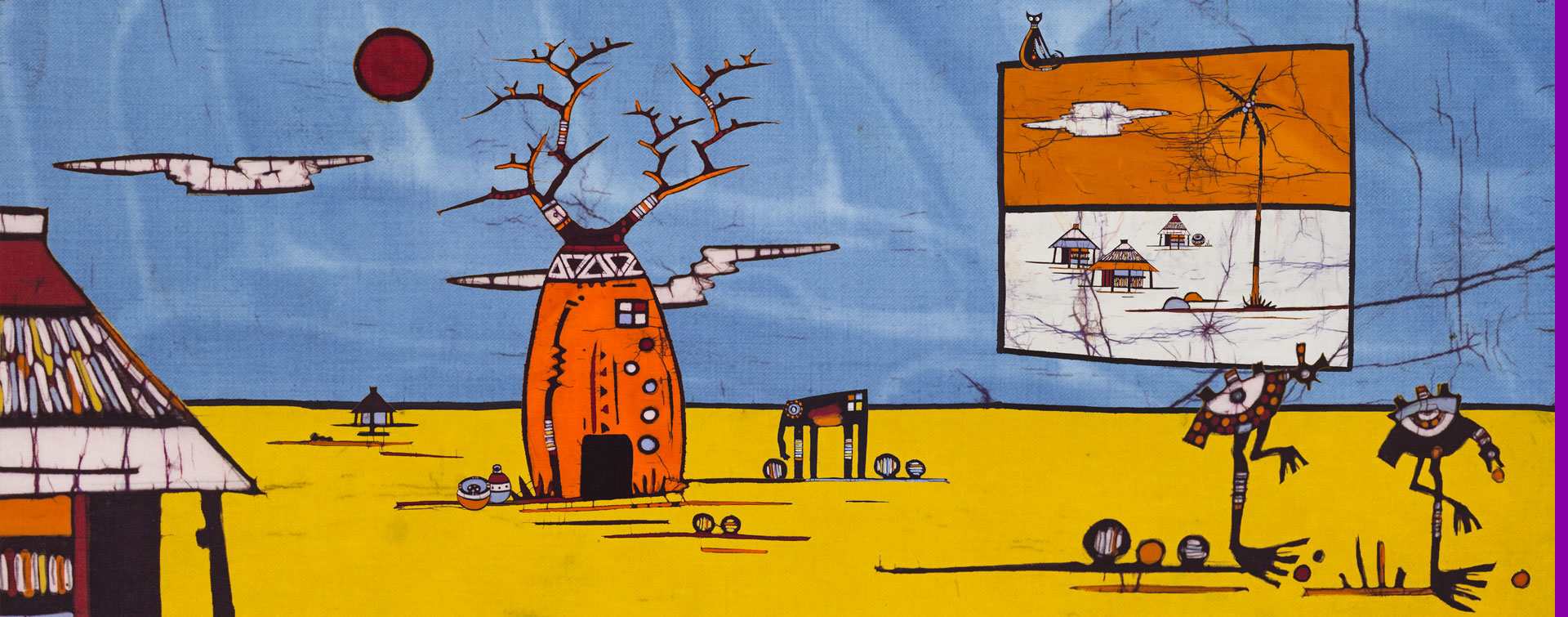
Nwavu, the Blind Man is a short animation film in development stage. It’s a film that proposes to combine a tale adapted from the Mozambican oral tradition with the visual aesthetic of the batik, which is one of the most iconic artistic expressions of our culture. The animation appears in this case as a privileged means to give a second life to these tales in risk of extinction.
This tale takes us though the journey of an old blind man who wants to marry a curious young woman. He will have to challenge community, nature and powerful spirits. From a Witchdoctor who lives inside of a Baobab to a village inhabited only by women, he will learn that the choices he makes will give him more than he bargained for.
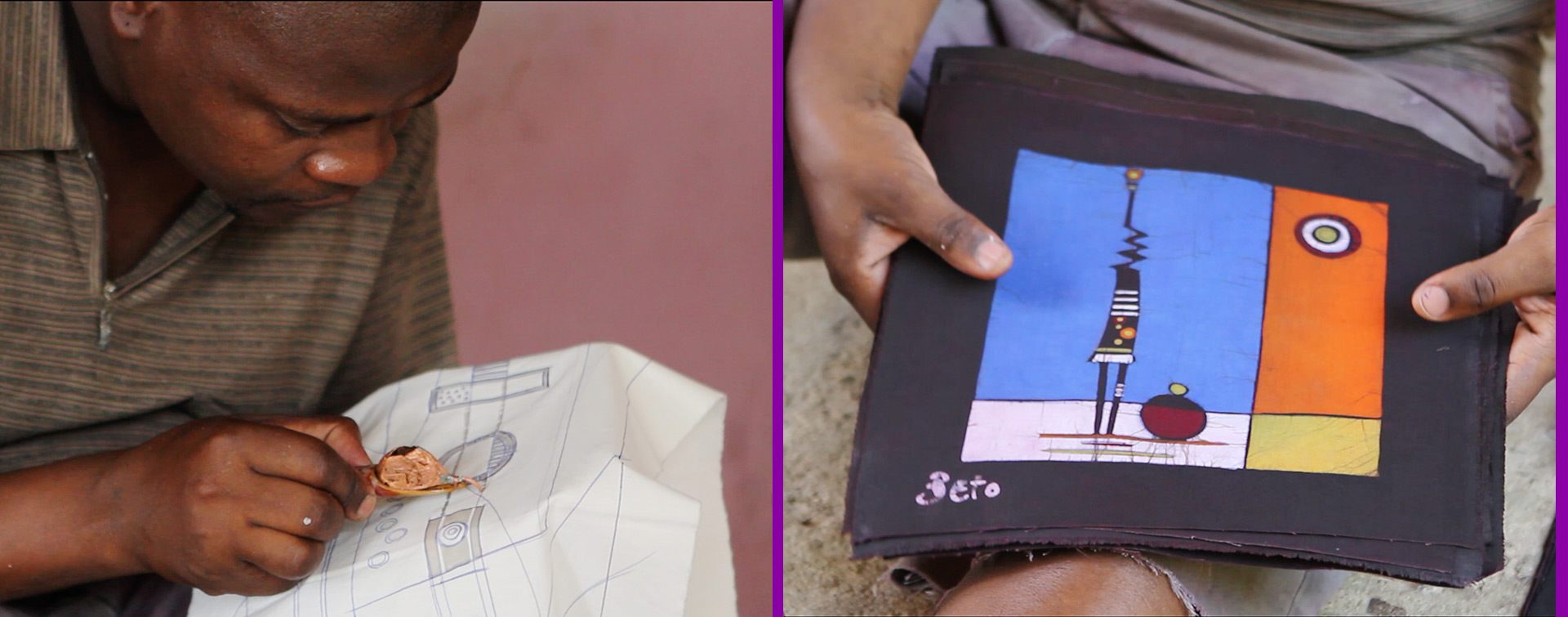
The process behind the making of this animated film is an experimental one. The whole aesthetic is being developed in collaboration with local artisans. Batiks of all the Characters and Backgrounds will be produced and only after that, we will scan, rig and animate them using digital tools.


the secret
desire
of nwavu.
storyline
The film begins with the secret desire of Nwavu, the blind man, who wants to marry a young woman and decides to reach the Witchdoctor for help. They make a plan that involves not a spell, but ingenious trickery. He takes a huge clay pot to the village centre and begins heating it in a big fire. People in the village get curious and start asking, what is the old blind man cooking? After several curious attempts, it’s with Djamilah that the deception unravels. When she opens the pot, the mysterious content evaporates. Nwavu acts completely desperate by his loss, claiming the potion he was preparing would cure him of his blindness.
The case is taken to the Witchdoctor, who sentences Djamilah to pay with six goats, three chickens and a milking cow for her bad deeds. She can’t afford to pay. Seeing her despair, in a “merciful” act, Nwavu proposes that she marries him instead as payment for her debt. Nwavu’s plan seemed to have worked perfectly. Little did he knew that soon Djamilah curiosity will lead them to the most unexpected and bizarre events.
we decided
to go “analog”
in this stage.
process
We are developing an unusual and experimental process. The whole universe, from the characters to the backgrounds and objects will be produced in real handmade Batiks. This physical side will allow me to have organic textures and colour depth from the cracked wax. Although it brings many added production difficulties, we decided to go “analog” in this stage, so that we could achieve a degree of authenticity that we would otherwise lose if we tried to “fake it” in digital. (watch the video below to better understand the Batik making process).
The Score, voice recordings and Foley will be led by Pedro da Silva Pinto. In collaboration with other Mozambican musicians, he will be responsible for creating a soundscape combining ambient sounds with a subtle flare of traditional Mozambican instruments like the Xigovia and the Mbira (see the animation tests video for a look and feel).
“nwavu
the blind man,
was chosen
as one of the
two
winners in the
animation
category.”
DLA Pitch Competition Winners
Digital Lab Africa (DLA) is the 1st platform dedicated to creative content (web creation, virtual reality, video game, animation, digital music) linked with innovation in Africa. The very idea of DLA is to incubate emerging creative talent by offering them a springboard to jumpstart and accelerate their projects with the support and expertise of DLA partners & ecosystem (studios, event, producers, broadcasters, distributors, experts…).
Among more than 730 applications, 10 creatives stood out for their talent, their creativity and their ability to defend their ideas. The 10 winners (2 in each category) get a 3.000 euros cash prize and a tailored-made incubation programme to accelerate their project development.
The DLA grant allowed director João Graça to attend the 2018 Annecy International Animation Film Festival and MIFA Animation Film Market. Also through DLA, he met program mentor Ivan Zuber (Laidak Films) who organized with Corinne Destombes (head of development at Folimage) a 3-week artistic residence at the Folimage animation studio, in Bourg-lès-Valence, France, where, with the precious contribution from animator Christophe Gautry he started developing the first animation tests of the project.
about anima
ANIMA is a Mozambican creative studio based in Maputo. We aim to communicate in a simple and direct way. We like challenges and we are always looking to create something different and innovative. ANIMA’s multidisciplinary team specializes in three complementary areas: Audiovisuals, Design and Digital Media. In our creative process, we articulate these areas in order to achieve a coherent and full spectrum communication.
Our core work areas are Social Development and Creative Industries. We invest in understanding local audiences and socio-cultural identity. The dynamics and diversity of the local context inspire us. We have work experience in all provinces of Mozambique and in several African countries.
about the director
João Graça (1979) is a Mozambican Director, DOP, and Editor. He worked in several film projects including the feature documentary, Maputo: Ethnography of a Divided City. His interests have always revolved around Social Development and Art. He has taught Design and Film in Mozambique and he is committed to encourage and develop local film production.
João graduated in Communication Design and holds a Master’s degree in Multimedia Art from Lisbon Fine Art School. He is one of the founding members of ANIMA Estúdio Criativo, based in Maputo, Mozambique.
With support from

Produced by

Contacts
estudio@anima.co.mz
+258 84 5245 007
Av. Tomás Nduda, 151
Maputo – Moçambique
Special thanks to